
Invest in higher education to restore good jobs
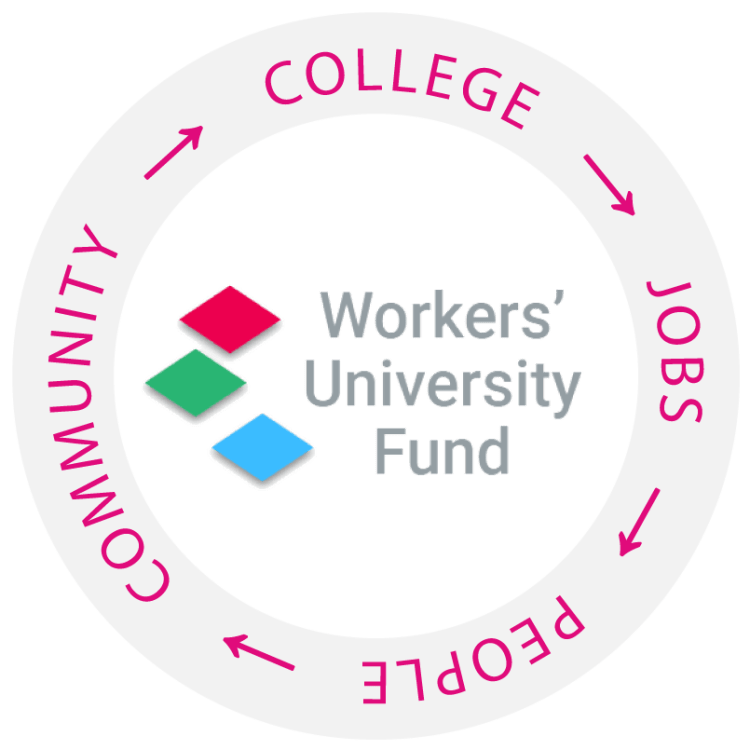
Good Colleges → Good Jobs → Good People → Good Community
A Workers’ University provides workforce training to improve standards and create jobs. Good jobs restore the foundational professions that create a full-service economy. Key sectors like architecture, agriculture, medicine, and education are context-dependent and therefore require skills. Mass production destroys skills, so quality drops unless we have standards. Young people want to learn the skills that have been lost to offshoring and automation, so they move back into local communities. The influx of talent reverses antisocial trends.
Certification Programs

High standards prevent special interests from monopolizing the market. Standards create space for local businesses to compete once corporations no longer have a free pass to destroy the environment and community. Standards price negative externalities into the cost of mass production by limiting how much damage can be done. Once standards are in place, over-specialization becomes unprofitable.

The protection afforded by standards only works if there are people who can meet those standards. Otherwise, we have to accept what exists. Therefore, in conjunction with higher standards, we need workforce training to teach skills. Jobs that require skills pay a living wage and contribute to society. People who were pushed out of the economy become motivated again to contribute instead of being a burden.

The local college can offer workforce training as long as the municipality agrees that it meets standards. Certification is necessary to ensure quality. Non-certified workers can still participate in the economy, but they have to comply with additional requirements.
Architecture

Design Standards: Natural buildings are adapted to the site and fit with the climate and customs.
Workforce Training: Teach vernacular building forms and natural building processes to encourage small developers and self-build housing.
Certification: Fast-track permitting for certified builders
Agriculture
Food Standards: Promote local organic farming.
Workforce Training: Teach regenerative farming, bio-intensive techniques, and ecological sustainability.
Organic Certification: Certification for local famers
Education

Education Standards: Content-rich curriculum, inquiry-based learning, behavior standards, neighborhood schools, appropriately-scaled buildings
Workforce Training: Best-practices in education
Teacher Certification: Fill the teacher shortage
Medicine

Health Standards: Preventative medicine over management plans and chemical interventions
Workforce Training: Small practices with a doctor-patient relationship instead of hospital conglomerates and protocols
Medical Certification: Fill the doctor and nurse shortage
Upgrade Your College
Funding opportunities don’t require participation from the local college. Whether developing a new college, or working with the existing college, the following criteria must be met:
1. The Campus
- Local Amenities: The campus must be located in a central location, within walking distance of amenities. It should be connected by bus routes to additional nodes and major transportation hubs.
- Adapted Architecture: The architecture should fit with the local history, climate, and customs. Historic buildings in need of renovation are ideal, but new construction is fine, as long as it meets the same level of quality as historic buildings.
2. The Curriculum
- Project-Based Learning: Lectures should be tied to multiple projects at different timescales. Big questions, such as “what is a good building?”, are long-term projects that take a lifetime to answer. Short-term projects, such as class exercises and homework assignments, motivate students along the way.
- Hands-On Research: Students want to do hands-on research. Courses should be interdisciplinary and related to real-word projects. Students should be allowed to do their own research, so they aren’t tied to existing scholarship.
- Content-Rich Curriculum: Courses should have a content-rich curriculum, according to statistically-proven scholarship. Students shouldn’t have to wade through muck to find what they need.
Content consists of:
- Scholarship, which compiles statistically-proven References
- Canon, which organizes the Scholarship
- Research, which updates the Canon
- Discourse, which debates Research
3. The Students
- Attract Talent: A program’s success depends on who it can attract. Young talent is worth more than anything else because it validates everything else. Future leaders decide prestige, which determines funding and accreditation.
- Selectivity: Students want to be around peers of like ability. The common denominator in success is intelligence. The best predictor of future success is past success because both require intelligence.
- Self-Respect: An admissions process that demeans the student by requiring time-consuming processes defeats the purpose of admissions. It offends the right kind of person, so only the wrong kind of person applies, which means only the wrong kind of people get admitted.
4. The Faculty
- Top-Ranked Experts: Students should learn from experts. Department heads should be experts in their fields and well-known in the community. Students can submit course evaluations to validate the consensus.
- Faculty Hierarchy: Leadership is necessary to develop and coordinate the university departments. Department heads are responsible for assembling a faculty and budget. Faculty can propose courses each year, subject to public interest and funding.
5. Job Prospects
- Values-Aligned: Low standards destroy job prospects, even more than low wages or a bad work environment. Students want to contribute something meaningful to society, whether it’s blue-collar work or white-collar work. BS jobs are low-status because they don’t require skills, so anyone can do them.
- Community Partnerships: Local leaders determine which skills are missing in the community. Mass production doesn’t work for context-dependent jobs because relationships can’t be commodified. A liberal arts education explains value, so students know what is socially and environmentally correct.
- Leadership Opportunities: Graduates can do research, teach courses, and advise the town board. Students receive professional certification upon graduating.
 Rules For Schools