

This article describes ways to improve culture. It is based on research from several Upstate NY towns. Part I: What is Culture? | Part II: Attacks on Culture | Part III: Future Culture
1. Antisocial Trends
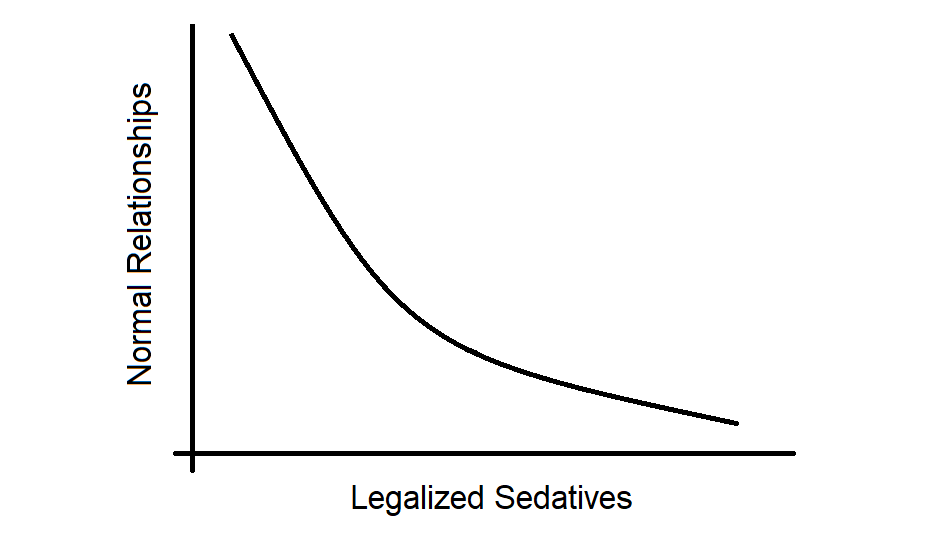
Antisocial trends destroy normal relationships and promote consumerism. If children can’t hang out with friends, they turn to social media. They might play video games, or watch movies. They might obsess over sneakers, or junk food, or sports. As long as it’s something that makes money, corporations have a reason to take away the thing that doesn’t make money. The commoditized version is not as good.
Product Placement
Product placement targets children without saying that it’s a commercial. Sometimes it’s obvious product placement, and other times it’s difficult to recognize. It might be disguised as a newspaper article, or a news segment. Brand specificity gives it away that it’s an advertisement. A superhero drinks Pepsi in a movie because PepsiCo paid for it. Brand specificity isn’t necessary when corporations make agreements with each other. PepsiCo owns most junk food, so they don’t need to say “Doritos” in the movie because it doesn’t matter which junk food you buy. They own the market, and they’ve made agreements with Kraft and Kellogg’s, so they only have to promote junk food in general. Corporate conglomerates only have to promote consumerism in general. When they own mass media, no money changes hands because it’s one division promoting another.
Self-Obsession
The best way for corporations to promote consumerism is to attack normal relationships. Normal relationships stand in the way of consumerism because they offer a meaningful alternative. When we see ourselves as part of something larger than ourselves, we set personal limits to make sure that we meet our responsibility to others. Without limits, we become addicted to instant gratification, so we buy more stuff. It feels antisocial because it becomes about ourselves, instead of family, community, work, and virtue. Paid entertainment attacks normal relationships as “oppressive”, and promotes consumerism as “freedom”. Paid celebrities push the messaging on young people who don’t know any better. The seed is planted early because otherwise children will develop normally.
Corporations want a fractured society that can’t push back. When normal relationships are destroyed by antisocial trends, collective action becomes impossible. Isolated individuals don’t feel connected to anything, so they don’t defend common interests. If a corporation wants to pollute a river, or build low-quality apartments, there isn’t any resistance.
2. Multi-Stage Campaigns
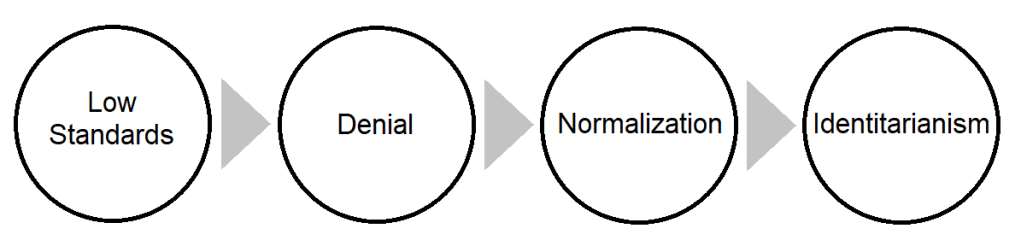
Corporations use multi-stage campaigns to push antisocial trends. They can’t attack everything at once, or people would recognize what’s happening and push back. Each stage softens the target for the next stage. When stages contradict each other, transitional explanations are used to justify why they’re doing the opposite of what they previously stated. For example, paid media will sell the first stage of a campaign by contrasting it with the radicalism of the final stage. “Stop fearmongering. Nobody wants that. It hasn’t even happened yet!” Then, when it’s time to sell the final stage, they forget about before. “How bad can it be? We already have it to some extent”.
Low Standards
Low standards tell students that it’s not worth doing what’s right because “who’s to say” what’s right? Students already don’t want to study before a test or eat healthy food because it takes work. We shouldn’t give them the excuse that “it’s not that bad”, and “some experts disagree”, so “who really knows?”. Low standards open the door to illiteracy, anxiety, obesity, etc.
Denial
Low standards give us a guilty conscience, even for minor transgressions. We are afraid to confront the issue because “we aren’t perfect either”. It takes the form of vanity statements like “I personally don’t do that, but live and let live”. We don’t want to think about it. We feel implicated, so we tell ourselves that it’s complicated. It’s happening “over there” to “other people”.
- Experts get attacked for “getting involved”, which means doing their job. Paid studies claim that antisocial behavior is actually good (“monkeys do it also”, or “prehistoric tribes do it also”).
- Special interests use bad arguments as fake “opposition”, so they look good by comparison. Schools are pressured into teaching “both sides”.
- Schools tolerate it because there’s only a few cases. It’s explained away as “genetic”, like it always existed, or it randomly mutated out of nowhere. When the numbers get too big, they rebrand it as a lifestyle decision, like everyone woke up one day and decided to handicap themselves for the not-good of society.
Normalization
After it makes its way through the school, and the numbers are undeniable, the school pretends it was always inevitable. “No one could have known.” There’s too much failure to deny what’s happening, so the school accepts it. “Look how many people are affected. Therefore, it must be normal”. We sense that it’s bad, but it’s “bad” in a good way. “It makes us think.” “It’s cultural.” “It’s interesting.”
Identitarianism
The last stage of the campaign is to celebrate the failure as “self-expression”. The school attacks anyone who wants to fix the problem because nothing needs to be fixed anymore. It’s a good thing. The failure is an identity.
Trauma Events
Special interests use trauma events, or stunts, to shift public opinion in their direction. Under normal circumstances, we reject antisocial trends. Change requires friction, and trauma events are the friction to get things moving. They are the reason to “do something”, so we don’t end up on the “wrong side of history”. The facts are unbelievable, and they shouldn’t be believed. It’s a spectacle, engineered to create an emergency-level response. By the time the story gets corrected, the popular takeaway is cemented into the zeitgeist. It can’t be overturned because it’s part of our collective identity. We don’t want to think about it. The transitional explanation is that it was an oversight, like “what were we thinking?”. An example of a trauma event is the AIDS campaign in the 1990s, which implied that disease exists in the ether like a rain storm. It’s not what the scientists said, but it was pushed by special interests to mass market new drugs.
Manufactured Consent
Paid media doesn’t say what to think, but they give data points that lead to a set conclusion. It makes viewers think that they came up with it themselves, so they’re proud to repeat it. They’re not suspicious that it’s manufactured consent. But coincidentally, everybody else who consumed the same news segment walked away with the same “opinion”. It’s meant to reinforce a particular line of thinking that’s difficult to dig ourselves out of.
3. Cultural Misconceptions
Corporations use cultural misconceptions to advance antisocial trends. Whereas common misconceptions come from school and spread into culture, cultural misconceptions come from culture and spread into school. They are excuses that children use to avoid responsibility. The goal is to explain away anxiety, which exists for our benefit to signal that we’re going in the wrong direction.
Quick Fixes Work
Quick fixes are marginal improvements, but we shouldn’t be going in the wrong direction. The further away we get from what’s correct, the more quick fixes we need before we hit rock bottom. The woman from the nursery rhyme who swallows the fly, shouldn’t swallow the spider to catch the fly. She shouldn’t swallow the bird to catch the spider, and she shouldn’t swallow the cat to catch the bird. Marginal improvements of that type ultimately make things worse.
Examples of quick fixes:
- Liposuction doesn’t work after a few years unless the person fixes the underlying problem.
- Safe injection sites work in the short-run, but unless it’s part of a larger rehab program, it enables addicts to keep using, which creates an atmosphere of acceptance that leads to more overdoses in the long-run.
- Abortions reduce unwanted pregnancies in the short-run, but they cause more unwanted pregnancies in the long-run. People treat reproduction less seriously, so they’re less discriminatory. There are more orphans per capita today than during the 1950s.
Health Is Overrated
We’re not worried about something unless we have control over it. A crippled person accepts their situation, and makes the best of it, because it wasn’t their fault. When a student says they’re unhappy with how they are, it means that it’s within their control to fix the problem. It’s not the student’s fault because social issues didn’t exist to such an extent in prior generations, so we can’t blame them. It’s nobody’s fault except the special interests who push antisocial trends, and then benefit from the failure. Paid professionals pretend it’s fine, which adds to the student’s anxiety. The student knows they’re not fine, or they wouldn’t be receiving help. It causes them to doubt themselves. Special interests tell the victim to attack experts because experts are indirectly calling the victim “sick” in fixing the “problem”. Special interests don’t want to fix the problem because they are the problem.
Anxiety Has No Cause
Anxiety comes from not changing what we know we should change. When a student doesn’t study for a test, they have anxiety. The anxiety doesn’t go away after the test because the student knows they could’ve done better. If they did the best they could, they wouldn’t have anxiety. Students express anxiety by acting out, self-sabotaging, not paying attention, playing pretend in their head, etc. Treating symptoms chemically doesn’t work because after the chemicals wear off, more time has passed, and the student is further away from confronting the underlying issue.
Distractions reduce anxiety-tolerance, so students can’t reflect on their anxiety, and overcome it. Anxiety-tolerance is important because certain functions, like learning, require delayed gratification. It isn’t fun to not know something, which is why it’s rewarding to finally understand it. Over-stimulation reduces the student’s ability to sit through anxiety. Free dopamine from distractions is easier than earned dopamine through learning. (Learning includes both classroom learning, as well as learning from our mistakes.) Free dopamine is followed by a crash, followed by the need for more dopamine. The student can’t concentrate because they’re addicted. We should reduce over-stimulating distractions.
Examples of over-stimulating distractions:
- Devices like cell phones that have social media, games, and videos
- Entertainment that is shocking, fast-moving, and visually jarring.
We should reduce anxiety by enriching the curriculum and the school environment. We should reinforce correct behavior, so students have the discipline to overcome anxiety. Learning should be sensory, practical, and engaging.
Examples of anxiety-inducing triggers:
- Lack of personal connection. No sense of belonging. No opportunity to learn discipline through responsibility
- Screen learning, which is not a full-sensory experience
- A sterile school environment with nothing tactile to touch, and nothing interesting to look at.
Identity Cures Anxiety
Identity is used to misidentify the victim. Victims are told to wear identity like a mask in order to project power. An athlete who uses illegal drugs feels powerful for dominating at sports. Even though it’s unfair to the rest of the sport, the true victim is the athlete who is willing to poison their body for attention. The athlete pretends to be powerful to mask the suffering that causes them to go to such extremes. The desire to feel powerful at all costs is promoted by special interests. The archetypal example is the superhero villain who has no limits. Special interests bait vulnerable populations into imitating it by asking, “Why do they get to be powerful, and you don’t?” Society doesn’t work that way, but when we only see glorified examples of it, we want to “get ours”, even though it destroys us. The misconception is that we get ahead at the expense of others. It tricks students into doing what they know is wrong. The victim is told to put on the mask to become something else, so they don’t have to listen to their conscience. Successful people, whether in school or in life, are the least identity-driven.
Angst Leads To Violence
Anxiety causes angst, which leads to violence. Criminologists describe it as “itches” in the blood. Criminals are excitable because they’re looking for external answers to internal problems. They make up excuses to release what’s already inside of them. No matter what’s done to a righteous people, they don’t respond violently because they can’t. It’s not in them. An unrighteous people will create pretexts, or use pretexts, to do what they’re going to do anyways. They’re told that losing control actually gives them control over others. If they can’t control themselves, maybe they can control others by imposing on them. The misconception is that it’s possible to control other people. Each person has an internal constitution that only surrenders to external forces if it decides to. The criminal wants to believe that they can cause suffering in other people, so they can in turn blame their own suffering on other people, instead of themselves.
A true victim loses what makes them human. If we witness a bear attack, we expect the bear to act like a bear. The human who gets injured isn’t necessarily a victim if he considers it a minor injury, a lesson learned, or a reason to be more careful, to carry a gun, etc. If we witness the same attack, but with a human attacking, we would ask what caused the person to do that. What went so far wrong? The true victim is the criminal, even though that’s not a reason to let them out of prison. It’s the reason they should be in prison, which is for rehabilitation. Smart-on-crime means preventing transgressions from getting to that level. It means not portraying crime as powerful, which gives juveniles excuses to do what they know they shouldn’t. We bait them into it by saying don’t do that, but at the same time putting in on the table as an option, and making it look cool. They end up going to prison because they were told the wrong things, and no one objected.
Consensual Harm
Mutual bloodletting in the form of violence is a consensual way to overpower anxiety, but only temporarily. The injection of adrenaline eventually wears off, and the victims are the same as before but with injuries. The same concept, at a larger scale, is endless warfare, tit-for-tat revenge, and mutually assured destruction. The mindset is “they’re asking for it”, but at the same time subconsciously, “I deserve it too”, so both parties agree to engage in what’s not in their best interests. They’re compelled to put themselves in harms way, for the sake of harming themselves. It’s the same angst that leads to self-harm by teenagers, or reckless behavior in general. Examples of low-level self-harm include intentionally looking for trouble, picking fights, ignoring red flags, etc. At a societal level, it looks like releasing criminals back into society without rehabilitation, knowing what will happen. The evolutionary explanation for consensual harm is that it’s better to take ourselves out of the future if we’re engaging in antisocial behavior. It makes sense to feel worthless if we’re being worthless.
Everybody Suffers
Society is at fault for failing to offer an alternative. When good jobs disappear from society, BS jobs fill the void. Without something higher to aspire to, we cling to materialism. We resort to bean counting. We don’t have a problem accepting unearned wealth when it’s the basis of our income. Young people don’t see how they can make a living doing something legitimate, so they hope for a miracle. They can’t see themselves buying a house or starting a family, so legalized gambling becomes a way out:
Each demographic is given their own version of “respectable” gambling. The promise of unearned wealth, whether it materializes or not, is not rewarding as a life goal. Corporations offer “self-therapy” as an escape:
Special interests say that “everybody suffers”, and “it’s just part of life”. Illegal self-therapy is kindly legalized for “our benefit”. “Just relax and don’t worry about it”, say the same people who created the problem in the first place. The same people who took away real jobs are the same people who spend billions of dollars to legalize illegal sedatives. Not only do corporations make money from legalized gambling and self-therapy, but they also don’t face anti-corporation resistance because everyone is semi-sedated.
4. Institutional Sabotage
Failing Institutions
Institutions reinforce normal relationships. They counter antisocial trends. Since institutions are against special interests, corporations pressure them to subvert their message. Visible signs of corporate influence include:
Corporations use multi-stage campaigns to take over institutions. The goal is to weaken institutions from within until they become the opposite of themselves. Once an institution is compromised, it sabotages itself. Everything gets inverted because special interests are at odds with the public interest:
Corporations have different intentions than the public, so they understand failure differently. They prefer it. When the public fails, they win. It’s an inverse relationship. The more influence that corporations amass, the more valuable they become, which amasses more influence. It’s a vicious circle because over-consolidation leads to dependency.
The Wrong Message
Institutions with the wrong message succeed in failing. In the case of universities, content-lite curricula deprive students of what they need to know. Students are unprepared for the profession, so they do what industry tells them. They can’t contribute to the profession, so they look for meaning elsewhere. Normal relationships, like friends and family, are attacked as “oppressive” because they constrain us. Character education is replaced with anti-social trends. Paid professionals pretend to be surprised at the bad outcomes. Surveys prove that the takeaway is the message. For example, if 50% more students contemplate self-harm after taking a class on depression, that was the intention. The teacher can say “don’t do it,” but it legitimizes the “other side”, which was the actual message.
Bad Outcomes
Sometimes, the wrong message actually works. But, if the outcomes are as bad as expected, then it’s a problem, and the institution needs to explain itself. Consistent failure suggests that the institution in question has different priorities than the public. Instead of admitting that there’s a problem, they lower standards, or they toss out standards all together. They paper over the problem to buy themselves time.
Anti-Expert Bias
Failing institutions might want to improve, but they don’t know how. If that was the case, they would be open to new ideas. They would listen to experts, and imitate what works. The fact that they are hostile to experts proves that it’s intentional. Saboteurs are uninterested in improving the profession. They replace textbooks with busywork. They create their own self-referencing cliques with credentialing power. They purge experts by attacking competence in the name of equality, because not all people are competent.
“New Professionals”
When people ask “why is this happening?”, paid professionals downplay the amount of sabotage. They explain it as choosing equality over competence. “When less than 1% of the profession is [fill in the blank], it’s difficult to find enough competent people.” An honest person, even if they’re incompetent, knows that they shouldn’t be CEO. By accepting a position they’re unqualified for, “new professionals” demonstrate their moral indifference. At that point, incompetence and bad intentions are the same thing, because they’re lying about ability. It tends to be young people who are easily managed, non-native speakers who don’t know the intricacies of the system, people who are less confrontational than average, which is good for corporations who want to “change a few things”, and self-obsessed people who want the salary, uniform, and job title, but who aren’t interested in the profession for its own sake. During the over-prescription of opioids scandal, not all doctors went along with it. Only certain doctors did, and it wasn’t the established doctors. It was the “new professionals”, who had a “new take” on the profession, which included accepting perks. Corporations are intentional about who they select as saboteurs, so we shouldn’t blame specific groups of people for being used. Corporations want other people to be the face of failure, even though it’s not their fault. The figureheads are pressured into it, and they’re overwhelmed by the responsibility.
Corporate Funding
It’s possible to blame everything on a series of unfortunate mistakes that just happens to benefit corporations. However, the main source of funding is corporate money. Why would special interests pay institutions, unless it benefited special interests? The people in leadership positions are mostly industry people. The directives come from industry. If an institution seems out of character, it’s because the institution is working for special interests. Corporations have the motive, which is to destroy normal relationships. They have the means, which is money and influence. And they have the opportunity, because they did it. The evidence is consistently bad messaging, bad outcomes, bad solutions, and bad leadership.
Major Institutions
Major institutions get targeted for sabotage because of their impact on culture.
We shouldn’t get rid of institutions (unless they’re immediately rebuilt), because in their absence, we face the same problems. Without strong institutions, there’s no way to push back against special interests.
Education: Declining academic achievement is supposedly balanced out by emotional intelligence, but those outcomes are even worse. Rates of depression and mental illness have skyrocketed. If students can’t read, write, or do math, they feel bad about themselves. Schools pretend that emotional suffering is inevitable because then it can’t be the school’s fault. Students act out in frustration because they don’t know enough to do anything. Discipline is called “religious” so schools can “separate” it from their responsibility. Administrators, teachers, and counselors are as much victims as the students. The “new professionals” are told it’s a trend, like we don’t know how it’s going to turn out yet, so just be patient. They’re given a new vocabulary to redefine failure. Self-destructive behavior is “letting off steam”. Anxiety is a medical condition that requires Big Pharma. Self-obsession is “self-expression”, but it also requires Big Pharma. Bad outcomes are hidden from public view by changing the criteria. Schools look better when 100% of students graduate, and 0% of students commit crime. The answer is to remove graduation requirements, and to stop arresting students for crime.


Architecture: The decline in architecture is explained away by saying that we prioritize different things now. It makes us feel in control of the situation. If we did it to ourselves, then it wasn’t sabotage. We chose “efficiency” over beauty, even though they go together. Beauty is due to efficiency. Beauty exists when there isn’t anything extra that can be taken away from the composition. The same architect who knows how to proportion a building correctly, knows how to structure it correctly. It’s a question of quality, or high standards. Quality isn’t a luxury because every building prior to 1930 was high-quality. Decline in quality is due to mass production, which is the opposite of architecture. Mass production allows corporations to scale up profit by using stock plans that ignore context. Context, such as site, terrain, views, sunlight, existing buildings, etc., is the basis of the profession. If architects use stock plans, they don’t need to respond to context, so they don’t need to learn skills. Having skills is a problem for big developers and manufacturers who want “new professionals” to administer cheap buildings without assessing the damage done to communities. They don’t want skilled architects and developers working together with the community to create adapted buildings that fit with the character of the place.


Healthcare: A healthy person attracts us because we sense that nothing is wrong. A healthy person wants to be around other people. Pale skin and dark circles are not attractive because it suggests that the person has not taken care of themselves. They haven’t slept, or gone outside, and therefore, they’re more susceptible to disease. They know how they look and feel. The radiant energy of a healthy person applies to both physical and mental health. Physical problems have psychological causes. An obese person knows that they’re unhealthy, but they can’t help it. They don’t see a future for themselves, so they don’t take care of their future selves. The consumerist lifestyle replaces normal relationships. It benefits special interests, but it leads to bad outcomes. “New professionals” are taught to accept the failure. They separate causes and consequences, so self-destructive behavior seems less destructive. The consequences are considered random, like we caught it from the air. It’s blamed on genetics, like we were faulty from the start, and now we need expensive medical interventions to manage the initial oversight. Our biological instincts are part of the handicap because sick people are supposedly healthy. Feeling bad is normal, and looking bad is normal.

Medical interventions should focus on fixing problems beforehand. If plagues are caused by poor sanitation and unhealthy lifestyles, then instead of accepting plagues as normal and trying to mitigate the damage after the fact, the ideal solution would be to not have plagues in the first place. Special interests pretend that the human immune system is inherently flawed. It’s not that we have unhealthy living conditions, which would be their fault, it’s evolution’s fault for making our immune system defective. Humans are defective at being human, so the “fixes” require “post-human” interventions. The reason I drank two milkshakes is because I have the “milkshake gene” that makes me drink two milkshakes.
Agriculture: When farmers are wearing hazmat suits, something has gone wrong. Food should be nourishing, not toxic. Chemical fertilizers are necessary because of genetic engineering, which is necessary because of pesticides, which are necessary because of monocropping. Instead of depending on bad practices that advantage special interests, we should start by looking at nature. Healthy ecosystems are self-generating. We don’t need to reinvent what already works. Trying to cheat nature by bio-disturbing the environment is like playing whack-a-mole. Since it’s not a holistic solution, the problem pops up somewhere else, and it requires another quick fix, and another, until we’re wearing hazmat suits. Corporations want to control agriculture completely, using synthetic techniques. Grafting an apple tree to a rootstock is not the same thing as splicing a cow’s utter with a spider’s web. Breeding dogs is not the same thing as mating a horse with a donkey, which produces an infertile mule. The inability to reproduce is a natural backstop against further degradation. Splicing species that can’t reproduce naturally is illegal in most countries because of the cross-species contamination that causes birth defects and disease. Undisturbed food is healthier, and it looks better. The community can celebrate it’s own fresh fruits, vegetables, and livestock. The experience of harvesting food, and knowing where it came from, is socially and spiritually rewarding. The community can’t be held hostage by shortages and high prices. Everything is local, so there’s no supply chain. There’s no need for preservatives or over-processed food. Small farms are trusted, and they provide good jobs.


A common misconception is that natural processes are dangerous, and we need “technology” to fix them. Cows (of themselves) cannot cause pollution grazing off in the distance with a red barn and a sunset over the pasture.
Natural Systems
It’s better to have small farms with healthy food than it is to pay Big Ag to feed us chemicals, and then pay Big Pharma to medicate us afterwards with chemicals. It’s better for kids to learn how to overcome problems, instead of paying Big Ed to give them anxiety, and then paying Big Pharma to diagnose them and treat them with drugs. Planets would not align perfectly, with everything on earth set up to support life, if a flaming meteor was about to destroy everything for no reason. Hysteria against natural systems comes from not following our instincts. Our instincts tell us what is evolutionarily beneficial. We call it “attractive” because it attracts us. It’s a convenient way to know whether something is helpful or harmful. If a lake looks disgusting, then we shouldn’t drink the water or eat the fish. The lack of beauty is an aesthetic clue that it’s bad for our health. A crystal clear lake on a sunny day attracts us because it’s good for us. We are meant to live in harmony with nature like the rest of the ecosystem. Humans increase biodiversity in the same way that animals increase biodiversity. Cows and chickens fertilize the soil and aerate it for plants because that’s in their nature. Humans benefit the ecosystem when we follow our instincts. We tend the soil, we thin overgrown forests, we hunt overpopulated species, etc. What’s good for the planet is good for us (in the long-run), and vice versa.
Compartmentalization
Nobody wakes up thinking they’re a bad person. In order to live with ourselves, we have to rationalize what we’re doing. Corporations use compartmentalization to manage sabotage.
The primary actor, the corporation, needs to justify their actions to themselves. Even though their interests are contrary to public interest, they find ways to rationalize it. “Society is privileged.” “Can the planet handle growth?” “Who gets to decide the future?” “If we don’t do it, somebody else will.” The corporation knows that it’s wrong, but it benefits them, so they come up with reasons for doing it. Their arguments are different from what they tell institutions because the institutions would object. The pitch to institutions is that we’ll give you funding to try this “new idea”. The discrepancy in messaging is explained as everybody has their own perspective, so we have to tailor the message to who we’re talking to. The following example describes compartmentalization in K-12 education.
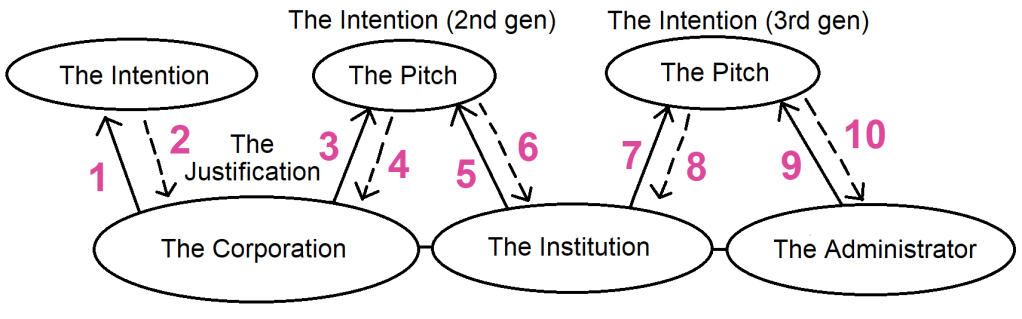
The Corporation
- Corporations benefit from truancy, violence, and low achievement because troubled youth don’t develop skills, so they aren’t a competitive threat. The resulting social dysfunction atomizes society, which benefits special interests because society can’t push back.
- Corporations justify low standards by saying that we don’t need a skilled workforce for the 21st century. “Jobs will inevitably be replaced by automation and outsourcing.” “The new generation is choosing leisure over work, so we’re just clearing a path for them.” “Knowledge is dangerous because individuals can use it to do bad things.”
- Corporations pitch their sabotage as “the future needs leaders who feel good about themselves”. They stress “accountability”, but they measure the wrong things. It’s not “college-ready” to graduate 100% of students if they can’t read or write. The metrics intentionally subvert schools, so teachers have to cut back on what works. It’s sold as a “new” take on academic and emotional intelligence. Low-end technical training replaces a content-rich curriculum.
- Corporations justify their deception by claiming that it’s optional. If institutions agree to it, “they deserve it”. “It’s survival of the fittest.” “The details were written in fine print, so our hands are washed of any guilt.”
The Institution
- Institutions are desperate for funding, so they accept the sabotaged “accountability”.
- The rationalization is: “We need money to promote our mission, even if it comes with strings attached.” “It’s for the greater good, because without funding, we’ll get shut down.” “If our stats look bad, nobody will move here.”
- The school can’t tell teachers to fudge the numbers, or it would be a scandal, so they pitch the idea as “equality”. “Students are underachieving due to reasons outside of their control, so holding them accountable with grades would be unfair.” “If students have social problems, corrective action would add to the stereotype of the bad student, which would make their life more challenging.”
- The school tells itself that “it’s complicated,” and, “everyone does it.”
The Administrator
- Teachers agree to pass failing students because “standards are oppressive”. “People need to figure it out for themselves.” “Everyone is different.”
- The incentives are structured to discourage teachers from doing the right thing. Any remediation is risky and time-consuming. Teachers could end up being investigated for not handling the situation correctly. It’s easier to just go along with it. “I’m just doing my job.”
The outcome is exactly as intended. The corporation benefits at the expense of society. Students lack guidance and fall behind, and society deals with the consequences.
 Rules For Schools